The Saga of the Frying Pan

Parshas Chukas is the first time the Jewish People found themselves with lots of treif keilim.
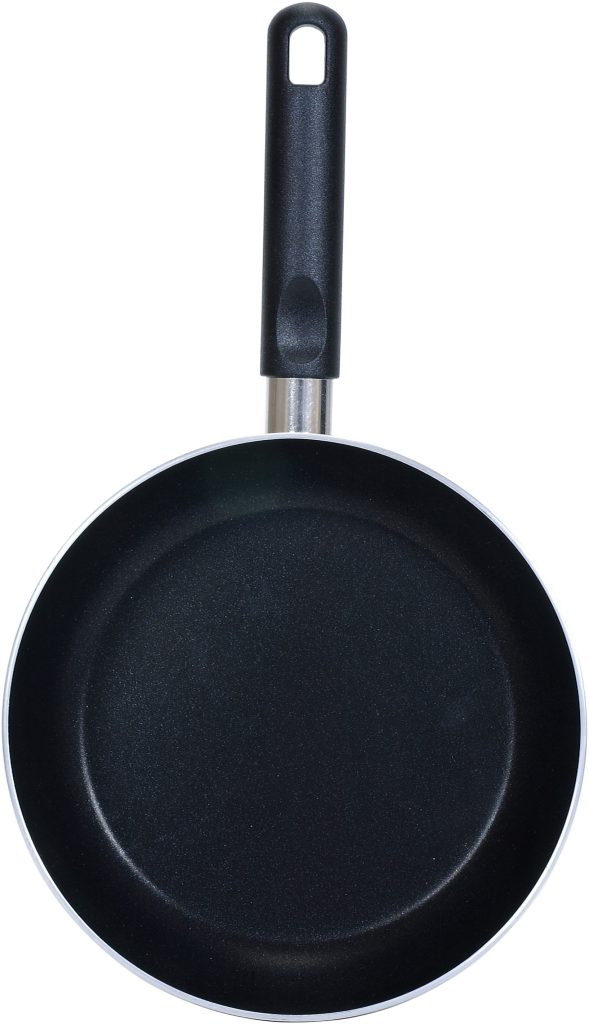
Question #1: It Fries through the Air

When the frying oil is all absorbed, is the food considered cooked directly by fire?

Question #2: With the Greatest of Grease

How do you kasher a commercial deep fryer?

Question #3: The Daring Young Pan

Can a frying pan present a daring challenge?

Question #4: On the Frying Trapeze

How do you kasher a frying trapeze? (I also have not yet figured out what that is.)

Kashering

The Torah teaches the halachic process whereby we kasher a utensil, when it commands, kol davar asher yavo vo’eish ta’aviru vo’eish, “Any item that entered fire, shall be passed through fire” (Bamidbar 31:23), thereby implying that kashering a utensil that became non-kosher through direct contact with a flame requires burning the appliance in a flame — no other process will sufficiently kasher this utensil.

The Mishnah (Avodah Zarah 75b) teaches that, upon purchasing used kitchen equipment from a gentile, one kashers the equipment via one of the following procedures:

1) That which is used to broil or roast food directly in fire must be kashered directly in fire, a process called libun. As examples of this rule, the Mishnah chooses a barbecue spit and a grate used for roasting. Since these utensils absorbed non-kosher ta’am directly through fire, they must be kashered by burning them in fire.

2) That which is usually used for cooking in a liquid medium must be kashered in boiling water, which is called hag’alah. Bear in mind that it must be fully clean and rust-free before it is kashered.

Kebol’o kach polto

This Mishnah teaches a rule called kebol’o kach polto, the same way a vessel absorbed non-kosher substance is the way one uses to kasher it. If a utensil; absorbed the food directly through fire, hag’alah, i.e., placing the utensil in a pot of boiling water, will not remove the residue of prohibited substance sufficiently to kasher it.However, if a prohibited or chometz-dik food was cooked in a pot, it can be kashered by hag’alah, which boils out what was absorbed.

Libun versus hag’alah

Hag’alah will remove sufficiently what was absorbed by cooking (Taz, Yoreh Deah 121:7; see Pri Megadim, Orach Chayim 452:4 in Mishbetzos Zahav). Most late authorities understand that the dissimilarity between libun and hag’alah is because the two methods of kashering operate in different ways. Libun removes the non-kosher residue by burning it in situ, similar to the way we destroy the last remnants of our chometz before Pesach. The spit or grill may be used for your kosher barbecue, because the residual flavor from the non-kosher meat has now been completely consumed. (Note, however, that there are rishonim who appear to understand this topic differently.)

On the other hand, hag’alah, boiling, kashers by removing the residue. The word hag’alah means to expel. In the book of Iyov, it says, “Their houses are safe, without fear, and no punishment from G-d is upon them. Their bulls impregnate their cows ve’lo yag’il — without miscarrying” (Iyov 21:9-10). The Hebrew word yag’il, which I have translated as miscarrying,has the same root, gimel, ayin, lamed as the word hag’alah. Rashi (ad loc.) explains that this root means to expel, and he rallies proof from the Mishnah’s use of the word hag’alah to mean to expel or extract the non-kosher residue by use of boiling water. By the way, the same root can also bear the meaning disgust, something that you want to “expel from yourself.” All of these words — miscarry, expel, extract and disgust — carry the same basic concept.  Thus, whatever taste of non-kosher food remains in the pot is dissolved and nullified in the water by the hag’alah (Shach, Yoreh Deah 121:17, quoting Re’ah; see also Pri Megadim, Orach Chayim 452:4 in Mishbetzos Zahav; Shu”t Igros Moshe, Yoreh Deah 1:60).

Therefore, libun could be used on an item requiring hag’alah, since it will satisfactorily burn up any residue. However, a utensil that requires libun cannot be kashered with hag’alah, since this does not remove sufficiently whatever was absorbed when the non-kosher food was broiled.

It fries through the air

At this point, we have “absorbed” enough background to discuss our opening question: When the frying oil is all absorbed, is the food considered cooked directly by fire?

When frying food, the food is cooked using a liquid medium, the oil. However, it is fairly common that, in the course of frying, the oil is used up and the food is fried without any visible liquid medium. At this point, do we view the absorption of the food into the pan to be direct, without a medium? Or do we contend that, since there is much oil absorbed both into the food and into the pan, it is still considered that the food was cooked via a liquid medium?

If we consider this to be direct absorption, the halachic conclusion is that kashering a frying pan requires libun. On the other hand, if we consider the absorption to be through the liquid medium of the oil, we can argue that a frying pan requires only hag’alah.

This issue is the subject of a dispute between two well-known rishonim who knew one another very well, the Rashba and the Rosh. (For a period of time, when the Rosh was a refugee from Germany who had fled to Spain, he lived as a guest in the home of the Rashba in Barcelona.) The Rashba (Toras Habayis, Bayis 4, Sha’ar 4) contends that a frying pan requires libun to kasher it, whereas the Rosh disagrees, arguing that it is sufficient to kasher a frying pan with hag’alah (Rosh, Pesachim 2:7; Shu”t Harosh 14:1).

With the greatest of grease

How do you kasher a commercial deep fryer?

By the way, it can be inferred from the way the Rashba expresses himself that he agrees with the Rosh that it is permitted to kasher a deep fryer with hag’alah, even it was used with treif oil. However, we will note another opinion shortly.

How do we rule?

This is where we are faced with a true conundrum. Without explaining his reasoning, the Shulchan Aruch states overtly that it depends on why we are kashering the pan. If we are kashering it because it was used for non-kosher, the Shulchan Aruch requires that we kasher it with libun (Yoreh Deah 121:4). However, if we are kashering it to make it Pesach-dik, he requires only hag’alah (Orach Chayim 451:11).

Although there are instances in which the Shulchan Aruch changed his mind, this is not one of those instances, since he writes himself that the law is different in the two cases (Yoreh Deah 121:4). So, what is the difference?

To explain the decision of the Shulchan Aruch, we find three approaches among the early acharonim.

First approach — contradictory Mishnayos!

The most common approach is based on a passage of Gemara toward the end of mesechta Avodah Zarah. A Mishnah in Zevachim seems to dispute one of the principles that I explained above. The Torah teaches that there is a mitzvah to eat the meat of korbanos, but that there is a time limit within which they may be eaten. After the korban’s time limit has passed, the leftover meat is called nosar, literally, leftover, and must be burnt. Eating it after this time violates a serious prohibition of the Torah.

What happens to the equipment used to cook the korban? The absorbed flavor remaining in the equipment becomes nosar and the equipment must be kashered. This means, essentially, that equipment used to cook or roast kodoshim must constantly be kashered.

How does one kasher the equipment? One would think that we would apply the same rules presented by the above-mentioned Mishnah in Avodah Zarah, i.e., that which is used directly on the fire requires libun, and that which is used for cooking in a liquid medium requires only hag’alah. However, the Mishnah in Zevachim states that a grill used to barbecue a korban requires only hag’alah (Zevachim 97a). This seems to say that there is a one-size-fits-all approach to kashering – and that hag’alah can be used to kasher anything, even that which absorbed the food directly via fire. This approach does not fit the rule of kebol’o kach polto.

As you can imagine, we are not the first ones to raise this question. The Gemara (Avodah Zarah 76a) does, and provides several answers. The conclusion of the Gemara is that, when the prohibited substance was permitted at the time of absorption (as in the case of meat of a korban, which is not yet nosar), a concept that the Gemara calls heteira bala, hag’alah is sufficient to kasher it. The opposite of heteira bala is issura bala, which means that the food was prohibited at the time that the absorption took place. The Mishnah in Avodah Zarah discussing used equipment purchased from a gentile is teaching the laws regarding issura bala.

Heteira bala

Why does heteira bala create a basis to be more lenient?

Some explain this phenomenon as follows: When a prohibited substance is absorbed through a medium, such as by cooking in water, hag’alah, boiling out the non-kosher vessel, will remove all of the prohibited substance. However, when the substance absorbed directly by fire, boiling it will not remove all of the prohibited substance. Nevertheless, it does remove most of the substance. When the vessel was used to cook a non-kosher substance, non-kosher flavor absorbed into the vessel and must be fully removed. But when the absorbed substance was kosher at the time that it was absorbed, the small amount of flavor that remains after the hag’alah was never declared by the Torah to be prohibited.

Kashering from fleishig

The Gemara mentions the concept of heteira bala relative to the absorption of permitted kodoshim, which will later become prohibited nosar. It is obvious that if one has equipment that absorbed fleishig residues and one wants to make it pareve, this is a case of heteira bala and will require only hag’alah. Following the logic I explained above, this means that although the Torah prohibited cooking and eating meat and milk together, it never prohibited cooking or eating with milk the small amount of meat flavor that remains after hag’alah was performed on a spit or grill.

Here is another example that I have been asked on several occasions:

In a food service operation, pareve baking trays were mistakenly used to bake chicken or meat. One might think that kashering these trays would require libun, since the absorption was direct from the meat into the tray, without any liquid medium. However, because of the principle of heteira bala, only hag’alah is required. Again, the logic here is that the meat flavor remaining in the trays after hag’alah is not sufficient to be included in the Torah’s prohibition of basar bechalav.

Is chometz considered heteira bala?

Since chometz is permitted to be eaten anytime but Pesach, it would seem that chometz should be considered heteira bala. This would mean that kashering chometz equipment for Pesach use would never require more than hag’alah. However, we find that there is a dispute among halachic authorities whether chometz is considered heteira bala or issura bala. Those who follow the stringent approach rule that, at the time of its use, chometz is what absorbed into the walls of the pot, and chometz may not be used on Pesach. The concept of heteira bala is applicable, in their opinion, to kodoshim products since, at the time that the grillwas used, the kodoshim products were not nosar; the small remnant that is left after the hag’alah cannot be called nosar. Chometz, on the other hand, was called chometz even before it was absorbed.

Whether chometz is considered heteira bala or issura bala is very germane in practical halacha. If it is considered heteira bala, then hag’alah will suffice to kasher all items for Pesach, and one is never required to kasher items with libun to make them Pesach–dik.

How do we rule?

Both the Shulchan Aruch and the Rema (Orach Chayim 451:4) conclude that chometz is considered issura bala. Therefore, one cannot kasher a grill used for chometz through hag’alah, only with libun. However, in a case of major financial loss (hefsed merubeh), one may rely on the opinion that chometz is heteira bala (Mishnah Berurah 451:32, citing Elya Rabbah and Gra).

Now let me return to our question: Why did the Shulchan Aruch rule that kashering a treif frying pan requires libun, whereas kashering a chometz-dik frying pan requires only hag’alah? Remember that we cited a dispute between the Rashba and the Rosh whether kashering a frying pan (from prohibited substances) requires libun or merely hag’alah. In addition, we have rishonim who contend that kashering from chometz never requires more than hag’alah. Thus, we have two different reasons to rule that, germane to Pesach, hag’alah suffices to kasher a frying pan, and only one reason if we are kashering it from prohibited food. Therefore, this explains why the Shulchan Aruch follows a more lenient approach regarding Pesach than he does regarding prohibited substance (see Beis Yosef, Levush, Taz and Shach to Yoreh Deah).

A second approach – from the frying pan into the fire

Based on a ruling found in the responsa of Rav Menachem Azaryah (usually abbreviated to “the Rama”) of Fanu (Shu”t Rama miFanu #96), the following approach is suggested: When cooking in a pot, water is typically used. Thus, the absorption into the pot took place via a medium that is itself kosher, and this might be the reason why hag’alah suffices to remove the prohibited substance from the pot. Since the non-kosher absorbed into the pot via a kosher medium, it does not get into the pot’s walls as deeply as it does when there is no kosher medium, which is the case when broiling or roasting, or, for that matter, frying using treif oil. When non-kosher meat is barbecued on a grill, the non-kosher absorbs directly into the rack or spit without any medium. That is why kashering to remove the prohibited food requires libun.

Similarly, when frying treif products, animal fat was presumably used at times as the medium for frying. In this situation, the medium used was itself non-kosher, and that is why the Shulchan Aruch ruled that we require libun when kashering treif pans. On the other hand, when chometz was fried, such as when someone made French toast, the oil is not chometz. Thus, the chometz always absorbed into the pan via a non-chometz medium, which is why hag’alah is satisfactory for kashering a chometz-dik frying pan(Notes of Rabbi Akiva Eiger to Yoreh Deah; Notes of the Chasam Sofer to Orach Chayim; Shu”t Chasam Sofer, Yoreh Deah #111; Machatzis Hashekel, Orach Chayim; Aruch Hashulchan, Yoreh Deah 121:11).

There are practical halachic differences regarding which approach we follow. According to the second approach, if we are certain that vegetable oil was always used when frying non-kosher meat, there would be no requirement to kasher with libun; hag’alah would suffice. This distinction would not exist according to the first approach.

There is another possible difference in practical halacha in the other direction. I mentioned above that, according to the Rashba, kashering a treif deep fryer may be done with hag’alah. However, it would seem that the Rama of Fanu would require libun, since the oil that was used was presumably some type of non-kosher, melted animal fat.

A third approach

Before I explain the third approach, I need to provide another introduction. A vessel that was used primarily with liquid, but on occasion was used without any liquid but — does it require libun to kasher it, because of the absorption that happened during the times that it was used without liquid, or may we be lenient to kasher it with hag’alah, since that is how it was used most of the time. This subject is disputed by the rishonim, Rabbeinu Tam, the Ra’avad (both on Avodah Zarah 76a) and others contend that this item must be kashered through libun, whereas the Ramban (op. cit.) rules that hag’alah is sufficient. This latter approach is called rov tashmisho, meaning that an item need be kashered only according to its primary use. (Because of space constraints, I will have to defer the explanation of this dispute to another time.)

Some acharonim explain the Shulchan Aruch’s reason for drawing a distinction between kashering a frying pan from chometz for Pesach, where he required only hag’alah, and kashering a treif frying pan, where he required libun, is because a kosher frying pan is used for many purposes, sometimes with water, sometimes with oil, and only upon rare occasion does all the oil burn off. Therefore, since rov tashmisho is with a liquid medium, hag’alah is sufficient. However, a frying pan that is used for treif is probably used most of the time for frying with melted animal fat, and most of the time the oil burns off. Therefore, the concept of rov tashmisho requires that the pan be kashered through libun (explanation of the Rama of Fanu presented by Pri Megadim, Orach Chayim 451:16 in Mishbetzos Zahav).

Conclusion

This article has provided a small introduction to some of the ideas of kashering. We now have a bit of understanding concerning a complicated halachic issue, with all sorts of ramifications. We can now get a sense of how much one’s rav or posek must keep in mind every time he answers one of our inquiries. Certainly, this is a time to appreciate his scholarship and his making himself available to us when we need him.

Some of the Basics of Kashering

Question #1: Sandwich Maker

“Can I kasher my sandwich maker for Pesach in order to toast vegetables with it?”

Question #2: Better than Boil?

“Is there a way to kasher things that is safer than placing them in boiling water in an open pot?”

Introduction:

Halachah assumes that when cooking food, taste residue remains in the utensil that was used. When this flavor residue, which is called ta’am, comes from something prohibited, it must be removed to allow the utensil to be used again to prepare food. When the flavor is from meat, one must extract it before using the utensil for a dairy product,* if the flavor is from chometz, the utensil must be kashered before it can be used for Pesach–dik products.

Although modern appliances are not mentioned in the Torah, the basic rules for kashering all appliances lie within a careful study of the passages of the Torah, the Gemara and the early authorities on this topic. The Chumash, itself, alludes to the halachic process used to kosher a utensil when it commands, kol davar asher yavo vo’eish ta’aviru vo’eish, “Any item that entered fire, shall be passed through fire” (Bamidbar 31:23), thereby implying that kashering an appliance that became non-kosher through direct contact with a flame requires burning the appliance in a flame — no other cleaning process will sufficiently kosher this appliance.

Shabbos Hagadol

One of our responsibilities prior to Pesach is to ascertain that we know how to kasher our homes correctly. The piyutim that were traditionally added to the prayers on Shabbos Hagadol include very detailed instructions on proper kashering techniques, and we find that the baalei Tosafos discuss and correct the texts of the piyutim to accommodate the correct procedures. This week’s article will provide some introductory information to this topic, as we explore how the Gemara explains correct kashering procedures.

Let us begin by examining a passage of the Gemara that discusses kashering one’s house for Pesach. The Gemara (Pesachim 30b) quotes a beraisa (halachic source dating from the era of the Mishnah) that if beef fat was smeared onto the walls of an oven, kashering the oven to be pareve again requires firing up the oven, which means building a fire inside the oven. This heating of the oven burns out the residue of the meat fat that is absorbed into the oven walls. The Gemara then recounts that Ravina noted to Rav Ashi that the earlier amora, Rav, had declared that there is no way to kasher chometz-dik pots for Pesach-dik use. Ravina asked Rav Ashi why this was so: Why not simply fire up the pots to make them Pesach–dik, just as one kashers an oven? Rav Ashi provided two answers to the question:

Metal vs. earthenware

(1) The beraisa that permits kashering an oven is referring to one made of metal, whereas Rav was discussing pots made of earthenware. Earthenware pots cannot be kashered, because once food flavor is absorbed into them, normal procedures will not physically remove the ta’am from the vessel. To quote the Gemara (Pesachim 30b, Avodah Zarah 34a), “The Torah testified that one will never be able to extract the flavor from the walls of an earthenware vessel.”

Ovens vs. pots

(2) Rav Ashi’s second answer is that an earthenware oven can be kashered by building a fire inside it, but not an earthenware pot. In those days, cooking was done by building a fire inside the oven and placing the pot inside or on top of the oven. This fire does not provide enough heat in the pot to remove the flavor (ta’am) that is absorbed inside it. Furthermore, building a fire inside the pot is also not a satisfactory method of kashering it. Chazal did not permit this method of kashering, because it may not be performed properly — the owner may be afraid that the pot might crack if it is heated long enough to kasher it (Rosh and Rabbeinu Chananel ad locum; cf. Rashi, who explains the Gemara somewhat differently.) This concern does not exist regarding an oven, presumably because this is the usual way of heating it.

Some basic rules

From this short passage of Gemara, we can derive some basic rules of kashering:

  1. When a concern exists that a particular method of kashering may break an appliance, Chazal prohibited using that method. There are many, many instances where this halachah is put into practice.

One example of this is our opening question. “Can I kasher my sandwich maker for Pesach in order to toast vegetables with it?”

Any method that might kasher the sandwich maker would very possibly ruin the machine. Therefore, it is not possible to kasher it for Pesach use.

  1. Earthenware has different properties from those of metal items, resulting in differences in halachah. Regarding metal and other types of items, there is a principle of kebol’o kach polto, that one extracts from a utensil prohibited flavor the same way the flavor was absorbed into the appliance. From the passage of Gemara quoted above, we see that there are exceptional cases when this principle does not apply. Materials such as earthenware can absorb substances that will not be removable afterwards. Rather than becoming completely extracted when one kashers them, some of the absorbed taste remains and gradually leaches out afterwards with each use, thus spreading prohibited flavor into all subsequent cooking (Tosafos, Chullin 8a s.v. Shelivna).

Exception – kiln kashering

Although the above-quoted passage of Gemara implies that earthenware pots cannot be kashered, Tosafos notes that this rule is not absolute — there is an acceptable way to kosher them. The Gemara (Zevachim 96a) implies that all earthenware vessels, even pots, can be kashered by firing them inside a kiln used for manufacturing earthenware (Tosafos, Pesachim 30b s.v. Hatorah). The intensity of heat in a kiln, which is far greater than the temperature used when baking or cooking in an earthenware oven, will remove the non-kosher or chometz-dik absorption from the walls. Furthermore, we are not afraid that someone will not kasher the utensil adequately out of concern that it will crack, because heating in a kiln is consistent on all sides and will not cause the utensils to crack (Rosh). It is uneven heating that damages the vessel.

There is an alternative explanation for why there is no concern that the owner will not kasher his pot adequately inside the kiln for fear that it will crack. In this instance, we feel that the owner will allow the pot to remain inside long enough to kasher properly because once the owner has placed the pot inside a kiln, this demonstrates that he has no concern about the pot breaking. This halachic conclusion is followed by the Shulchan Aruch (Orach Chayim 451:1).

Purchase from gentile

We will now examine a different passage of Gemara to learn more about the rules of the kashering procedure.

The Mishnah (Avodah Zarah 75b) teaches that upon purchasing used kitchen equipment from a gentile, one kashers the equipment via one of the following procedures:

1) That which is usually used for cooking in liquid medium must be kashered in hot water, which is called hag’alah.

2) That which is used to broil or roast food directly in fire must be kashered directly in fire, called libun. As examples of the latter rule, the Mishnah chooses a barbecue spit and a grate used for roasting. Since these appliances absorbed non-kosher ta’am directly through fire, they must be kashered by burning them in fire.

Kebol’o kach polto

From this Mishnah, we learn a new rule – that there is a hierarchy in kashering. If an appliance absorbed flavor directly through fire, boiling it will not remove the residues of prohibited substance sufficiently to kasher it. This explains in more detail the rule I mentioned above, called kebol’o kach polto, which teaches that extracting food residue requires the same method that caused the absorption initially, or a method that is more intense, as I will explain shortly. Therefore, if a prohibited food was cooked in a pot, it can be kashered by hag’alah, which is a method of boiling out what was absorbed. However, if a spit or rack absorbed prohibited food directly through fire and not through a liquid medium, hag’alah will not suffice to kosher it.

Libun versus hag’alah

It is axiomatic that a stronger method of kashering will work for vessels requiring a lower level of kashering (for items other than earthenware). Thus, a metal pot used to cook non-kosher can be kashered by libun, although it is not necessary to use this method.

Iruy, miluy ve’iruy

There are other methods of kashering, such as iruy, which means pouring boiling water onto an item or surface, and miluy ve’iruy¸ which means submerging an appliance in water for three 24 hours periods. In this article, we will not discuss these methods of kashering.

How long?

At this point, we are ready to go to the next step in understanding how to kasher properly. The first question we will explore is germane to kashering directly by fire, which is called libun. The question is: How long must the spit or rack be held in a fire for it to be kashered? At what point can we assume that all the prohibited absorption will be removed?

We find two statements of the Gemara answering this question, one in the Talmud Yerushalmi and the other in the Talmud Bavli. The Talmud Yerushalmi (end of Avodah Zarah) states that one must heat it until sparks begin to shoot off. The Talmud Bavli (Avodah Zarah 76a) explains that you must keep it in the fire “until you remove the surface.” In practice, the halachah is that one needs to heat it until sparks shoot off (Shulchan Aruch, Orach Chayim 451:4).

Summing up

To sum up: From these two passages of Gemara, we have learned three basic rules of kashering:

  1. Removing the residue of a prohibited substance from an appliance requires performing on it a procedure that is similar to or stronger than what caused the absorption in the first place.
  2. When a concern exists that a particular method of kashering may break an appliance, one may not kasher it that way.
  3. One cannot kasher earthenware items through conventional household methods.

Contradiction

However, a different Mishnah seems to dispute one of the principles that we have just explained. The Torah teaches that there is a mitzvah to eat parts of the korbanos offered in the Beis Hamikdash, but that there is a time limit within which they may be eaten. After the korban’s time limit has passed, the leftover meat is called nosar, literally, leftover, and must be burnt. Eating it after this time violates a serious prohibition of the Torah.

What happens to the equipment used to cook the korban? The leftover flavoring remaining in the equipment becomes nosar and the equipment must be kashered. This means, essentially, that equipment used to prepare kodoshim must constantly be kashered.

How does one kasher the equipment? One would think that we would apply the same rules presented by the above-mentioned Mishnah in Avodah Zarah. However, the Mishnah states that a grill used to barbecue a korban requires only hag’alah (Zevachim 97a). This suggests that there is a one-size-fits-all approach to kashering – and that hag’alah can be used to kasher anything, even that which absorbed the food directly via fire. This approach does not fit the rule of kebol’o kach polto discussed above.

As you can imagine, we are not the first ones to raise this question. The Gemara (Avodah Zarah 76a) does, and provides several answers. The conclusion of the Gemara is that when the prohibited substance was permitted at the time of absorption, a concept that the Gemara calls heteira bala, hag’alah is sufficient to kasher it. The absorption of korban meat in equipment qualifies as heteira bala because, until the time that it becomes nosar, it is permitted to eat the meat; therefore, hag’alah suffices.

The opposite of heteira bala is issura bala, which means that the food was prohibited at the time that the absorption took place. The Mishnah in Avodah Zarah discussing used equipment purchased from a gentile is teaching the laws regarding issura bala.

Heteira bala

Why does heteira bala create a basis to be more lenient?

Some explain this phenomenon as follows: When prohibited substance is absorbed through a medium, such as by cooking in water, hag’alah, boiling out the non-kosher vessel, will remove all of the prohibited substance. However, when the substance absorbed directly by fire, boiling it will not remove all of the prohibited substance. Nevertheless, it does remove most of the substance. When the vessel initially cooked non-kosher, non-kosher food absorbed into it and must be fully removed. But when the absorbed substance was kosher at the time that it absorbed, the residue left over after the pot was boiled is not enough to be considered non-kosher.

Kashering from fleishig

The Gemara mentions the concept of heteira bala relative to the absorption of permitted kodoshim, which will later become prohibited nosar. It is obvious that if one has equipment that absorbed fleishig residues and one wants to make it pareve, this is a case of heteira bala and will require only hag’alah. Here is an actual example:

In a food service operation, some pareve baking trays had mistakenly been used to bake chicken. Assuming that the chicken was placed directly onto the trays, one might think that kashering these trays would require libun, since the absorption was direct from the meat into the tray, without any liquid medium. However, because of the principle of heteira bala, only hag’alah was required.

Is chometz considered heteira bala?

Since chometz is permitted to be eaten anytime but Pesach, it would seem that chometz should be considered heteira bala. This would mean that kashering chometz equipment for Pesach use would never require more than hag’alah. However, we find that there is a dispute among halachic authorities whether chometz is considered heteira bala or issura bala. Those who follow the stringent approach rule that at the time of its use, chometz is what was absorbed into the walls of the pot, and chometz may not be used on Pesach. The concept of heteira bala is applicable, in their opinion, to kodoshim products since, at the time that the grills were used, they were not nosar. They could not become nosar afterwards since the small remnant remaining after the hag’alah will not be considered nosar.

Whether chometz is considered heteira bala or not is very germane in practical halachic terms. If it is considered heteira bala, then hag’alah will suffice to kasher all items for Pesach, and one is never required to kosher items with libun to make them Pesach –dik.

How do we rule?

Both the Shulchan Aruch and the Rema (451:4) conclude that chometz is considered issura bala. Therefore, one cannot kosher a grill used for chometz through hag’alah, but it requires libun. However, in case of major financial loss (hefsed merubeh), one may rely on the opinion that chometz is heteira bala (Mishnah Berurah 451:32, citing Elya Rabbah and Gra).

Libun kal

So far we have discussed kashering through libun, by means of a high temperature of direct fire. We have also discussed hag’alah, which is kashering through boiling in water. The rishonim discuss an in-between method of kashering, which is called libun kal, easier libun. Libun kal also uses direct heat to kasher, but it does not reach as high a temperature as does the libun we have been referring to until now, which is sometimes called libun chamur, strict libun, to avoid confusion. Libun kal is defined as heating metal hot enough that one sees that the heat has permeated through the metal fully (Mordechai, Avodah Zarah, end of 860). An alternative definition is that it is hot enough to burn straw. The poskim rule that when hag’alah would be sufficient to kasher, one may use libun kal as an alternative, but that it should not be used when there is a requirement to kasher via libun chamur (Mordechai, Avodah Zarah, end of 860).

How hot is libun kal?

At what temperature does straw burn? Based on experiments that he himself conducted, Rav Yisroel Belsky concluded that this is accomplished by a combination of temperature and time. His conclusion was that an oven heated to 550° F takes an hour to burn paper, at 450° it takes 1½ hours and at 375° it takes 2 hours. Thus, kashering with libun kal would require a longer amount of time at lower temperatures. We can thus answer another of our opening questions:

“Is there a way to kasher things that is safer than placing them in boiling water in an open pot?”

The answer is that since libun kal can be used whenever hag’alah suffices, one could kasher any items that require hag’alah by libun kal in a household oven, if one keeps the item in the oven long enough.

Conclusion

This article has provided a small introduction to some of the ideas of kashering, particularly to the concepts of libun and hag’alah. We have not yet dealt with several other types of kashering, including iruy, kli rishon, and miluy ve’iruy, all of which we will need to leave for a future time. We should always hope and pray that the food we prepare fulfills all the halachos that the Torah commands us.

* There is discussion among the halachic authorities whether one may kasher an appliance that is fleishig to use with dairy and vice versa. We will leave the discussion of that topic for a different time.


Many other articles germane to Pesach are available on this website. You can find them using the search words matzoh; chol hamoed; chometz; ga’al yisroel; hallel; omer.

image_print