Kosher Species

Question #1: How many mitzvos?

“Is keeping kosher more than one mitzvah?”

Question #2: Food for thought

“Am I required to eat each of the kosher species?”

Question #3: Check your scales

“Must I check fish for scales each time I purchase one?”

Introduction:

The Torah says (in parshas Shemini), Zos hachayah asher tocheilu, “These are the living things from which you may eat,” which the midrashei halacha and the Rambam count as mitzvos aseih. The Rambam considers these as lav haba miklal aseih, a prohibition verbalized as a mitzvas aseih, which is sometimes called an issur aseih. We noted that the Rambam counts four different mitzvos aseih, one to eat only kosher animals, one to eat only kosher fish, one to eat only kosher fowl, and one to eat only kosher grasshoppers. We also learned that the Rambam explains that he wrote the Sefer Hamitzvos to explain the rules that govern what is included in the listing of the 613 mitzvos. We now continue with part two of our article.

What type of positive mitzvah?

The first half of Sefer Hamitzvos consists of fourteen rules, called sherashim, that the Rambam established to determine whether something is counted as one of the 613 mitzvos. In the sixth shoresh, the Rambam rules that if a mitzvah is commanded in the Torah both as a positive commandment and as a negative prohibition, then it is counted as two of the 613 mitzvos — both as a mitzvas aseih and as a mitzvas lo sa’aseih. The Rambam explains that there are three types of mitzvos aseih in which this occurs.

1. In some instances, there is a positive mitzvah that is a flipside of the negative prohibition. For example, someone who observes Shabbos or Yom Tov fulfills a positive mitzvah (Pesachim 84a). There is also a negative prohibition which one violates by performing prohibited activity on Shabbos or Yom Tov.

Similarly, there is a positive mitzvah to observe shemittah, and negative ones involving performing prohibited activity during shemittah. Another example is fasting on Yom Kippur, which involves both a positive mitzvah of afflicting oneself and a lo sa’aseh.

2. A second type of positive mitzvah that accompanies a lo sa’aseh is what is called a lav shekadmo aseih — there is a mitzvah to do something, but one who violates the intent of the positive mitzvah will, at that time, also violate a lo sa’aseh. Two examples of this rule are the cases of the oneis and the motzi shem ra, both of whom are required by a mitzvas aseih to marry and remain married to the wronged woman (should she agree). Should he subsequently divorce her, he will violate a lo sa’aseh, in addition to violating the asei to remain married to her.

3. A third type of positive mitzvah that accompanies a lo sa’aseh is called lav hanitak le’aseih, in which the mitzvas aseih is the instruction that the Torah provides if someone violates the lo sa’aseh. Here are two examples of this situation: The mitzvas lo sa’aseh of nosar is to make sure not to leave over edible parts of a korban past the time that the Torah established for that particular korban. One who does leave over and violates the lo sa’aseh now becomes commanded to observe a mitzvah aseih of burning the leftovers.

A second example is the mitzvah of shiluach hakein, in which one is prohibited from taking the mother bird while she is fulfilling her motherly duties to her eggs or young. One who violates this prohibition by seizing the mother bird is now required to observe the positive mitzvah of setting her free.

We are now faced with a question: If the word tocheilu is a positive mitzvah, what is the Torah commanding us to do? It certainly does not fit the second or third of the three categories mentioned above. The second category would mean that there is a positive mitzvah that one is required to perform whose result one now wishes to abrogate. The mitzvah of tocheilu certainly does not fit this category. Similarly, tocheilu cannot fit the third category, because this mitzvah is not correcting an error.  

If tocheilu is included in the first category, it would mean that one who eats non-kosher violates an aseih, also. Whether we can look at the mitzvah this way appears to be the point of departure between the Rambam and the Ramban. The Ramban wrote the earliest commentary to the Rambam’s Sefer Hamitzvos, with a goal of explaining the Behag’s approach and answering the questions that the Rambam asks on the Behag. At times, the Ramban takes issue with some of the Rambam’s 14 rules. However, the Ramban accepts the Rambam’s sixth rule that a mitzvah, such as Shabbos or Yom Tov, when expressed by the Torah both in a positive way and a negative one, is counted twice, both as a mitzvas aseih and as a mitzvas lo sa’aseh. However,  the Ramban disagrees with the Rambam regarding these four mitzvos of identifying kosher species.

To quote the Ramban, “I see in this matter a major dispute (between the Behag and the Rambam) and, without any question, one of the opinions is erroneous. There are instances in which there is both a lo sa’aseh and an aseih in the same topic; however, both are not counted as mitzvos. An example is the permitted and forbidden animals, fish and fowl, where the Torah includes a positive statement, ‘this is the animal that you may eat,’ and Chazal interpret this to be a mitzvas aseih. Similarly, when it says, ‘you may eat any pure bird,’ this is counted as a positive mitzvah. And again, when it says, ‘this you may eat, from whatever is in the water.’ It is obvious that the intent of the Torah is not to say that when one eats an animal or a fish with the proper kosher signs that one fulfills a mitzvah, and that someone who traps them and then does not eat them is in violation of his observance of a positive mitzvah. The intent, clearly, is that one may eat only these species and not the non-kosher ones. This is called a lo sa’aseh that is derived from a positive statement (in Hebrew, this is called a lav haba miklal aseih), whose purpose is to establish that someone who violates the lo sa’aseh also violates an aseih.”

The Ramban then notes that in all of these instances, the Rambam counts as positive mitzvos that one check whether a species of animal, bird, fish or grasshopper is kosher. However, concludes the Ramban, “The Behag did not count them, because they do not include a positive activity, whereas avoiding eating the prohibited is already included in the lo sa’aseh. Consequently, referring to the prohibition in a positive way does not add to the mitzvah count in these instances, just as repeating the lo sa’aseh several times does not add an extra lo sa’aseh to the mitzvah count.”

The last point raised by the Ramban is mentioned by the Rambam and others. The Torah often repeats a prohibition many times. When the additional pasuk does not add any new halachic information, the additional reference does not constitute an additional mitzvah.

Be positive!

Many authorities rally to address the final point of the Ramban, that the Rambam’s inclusion of these four positive mitzvos must include some additional component or ruling to the halacha. Support for this approach can be brought from the way the Rambam, himself, mentions these mitzvos. In all four instances, the Rambam writes that we are commanded to check for the signs that the particular species is kosher. And he writes this in two places, once in the Mishneh Torah and another time in the Sefer Hamitzvos. There is also one time in the Mishneh Torah where the Rambam writes that the mitzvah is to “know” the kosher signs. What exactly does this mitzvah of checking or knowing entail?

What does a mitzvah add?

Many approaches are suggested to explain what the positive mitzvah might be including, according to the Rambam. Some understand that the mitzvah requires that one be completely familiar with the simanim of the kosher species and have hands-on experience. Book knowledge that split hooves and chewing cud are kosher signs, without knowing what these two terms mean, does not fulfill the mitzvah (Darchei Teshuvah 79:1, quoting Korban Aharon and Yad David).

A second approach is that someone who consumes food from a certain species, not knowing if it is kosher or not, who then discovers that he indeed ate a kosher animal, violates the mitzvas aseih for not checking the indicative factors first (Sefer Hachinuch; Pri To’ar, Yoreh Deah 79:1; Kinas Sofrim; see also Darchei Teshuvah 79:1). To quote the Sefer Hachinuch (Mitzvah #153) “One who violates this mitzvah because he checked only one siman and relied on that without checking for the other siman, even though it turns out that he ate from a kosher species, has neglected his observance of this mitzvah of checking simanim.”

What’s in a horn?

When the Sefer Hachinuch mentions this approach to explain the Rambam’s position, he adds a further comment that appears somewhat strange. He writes that there is also a requirement to know the simanim that identify whether a particular species is a beheimah or whether it is a chayah. There are several laws that are affected by this distinction, and the Gemara provides criteria, depending on the appearance of the animal’s horns, whereby one can identify whether a particular kosher species is a beheimah or a chayah.

However, this comment of the Sefer Hachinuch is very surprising. The Torah, as explained by the above-quoted comments of the Sifrei and the Sifra, includes a mitzvah that we identify whether a species is kosher or not. No matter how we understand this mitzvah of the Torah — and I will soon provide several other approaches — the mitzvah applies only to places where the Torah states that we may eat a certain variety of creature and then provides a defining characteristic or nomenclature. However, where do we see any mitzvah requiring one to identify whether a specific kosher species is a beheimah or a chayah?

The Minchas Chinuch answers that, in fact, horns do function as a secondary siman to determine whether a beheimah is kosher, although they do not function as a siman to determine whether a chayah is kosher. In other words, there are no non-kosher beheimos that bear horns, although there are non-kosher chayos that do. Thus, a beheimah having horns can be used to determine whether a species is kosher.

This explanation of the Minchas Chinuch is also a novel interpretation. The Torah provides two criteria to determine whether a mammal is of a kosher species: does it ruminate, and does it have completely split hooves. Granted that horns are a secondary characteristic, but where do we see that this is included in the Torah’s mitzvah?

More positive attitudes

There are also numerous technical answers why the Rambam counted tocheilu as separate mitzvos. Some authorities explain that one who checks the simanim of an unfamiliar species that he would like to eat, to see if it is kosher, fulfills a mitzvas aseih. This author is inclined to think that, according to this opinion, he should recite a brocha before checking, because that is what the Torah commanded one to do. We do not recite a brocha because of the machlokes haposkim as to whether this act indeed fulfills a mitzvas aseih.

We should note that the halachic authorities accept that once one recognizes a particular species as kosher, there is no further requirement to continue checking the kosher signs of this species (Minchas Chinuch 153; Darchei Teshuvah 79:1). Thus, there is no mitzvah to check for the scales of an obviously identifiable salmon.

Other positive approaches

Still others explain that the meaning of the Rambam’s mitzvas aseih is that one may not rely on the fact that a specific species is probably kosher. In general, there is a halacha that one may rely on rov. Upon this basis, someone not knowing whether a certain variety of bird or fish is kosher could rely on the fact that most fishes with a certain appearance are kosher, or that most birds are kosher. Although, in general, the halachic rule is that one may assume that what is before you is from the majority that are kosher, one may not consume an unfamiliar species, based on the information that there is a rov that this species is kosher (Shu”t HaRivosh #192).

There are other technical ways to explain the Rambam’s position. Some explain that one violates the mitzvas aseih by eating less than a kezayis, even though this is too small an amount to be culpable for violating the lo sa’aseh (Pri Megadim, quoted by Minchas Chinuch, Mitzvah #470 and by Maharam Shik, Mitzvah #154). The Minchas Chinuch (ad loc.), himself, suggests an alternative approach: Although one who consumes a non-kosher species in an unusual manner does not violate a lo sa’aseh, he will violate the mitzvas aseih min haTorah if he eats something that is not normally edible. This would be a novel and stringent idea in halacha, which has ramifications regarding the consumption of medicines and vitamins, a topic we have discussed in the past.

Conclusion

We see that there are halachic ramifications to the dispute between the Rambam and the Ramban as to whether there is a positive mitzvah to keep kosher, or at least, to eat only from kosher species. We should always hope and pray that the food we eat fulfills all the halachos that the Torah commands us.
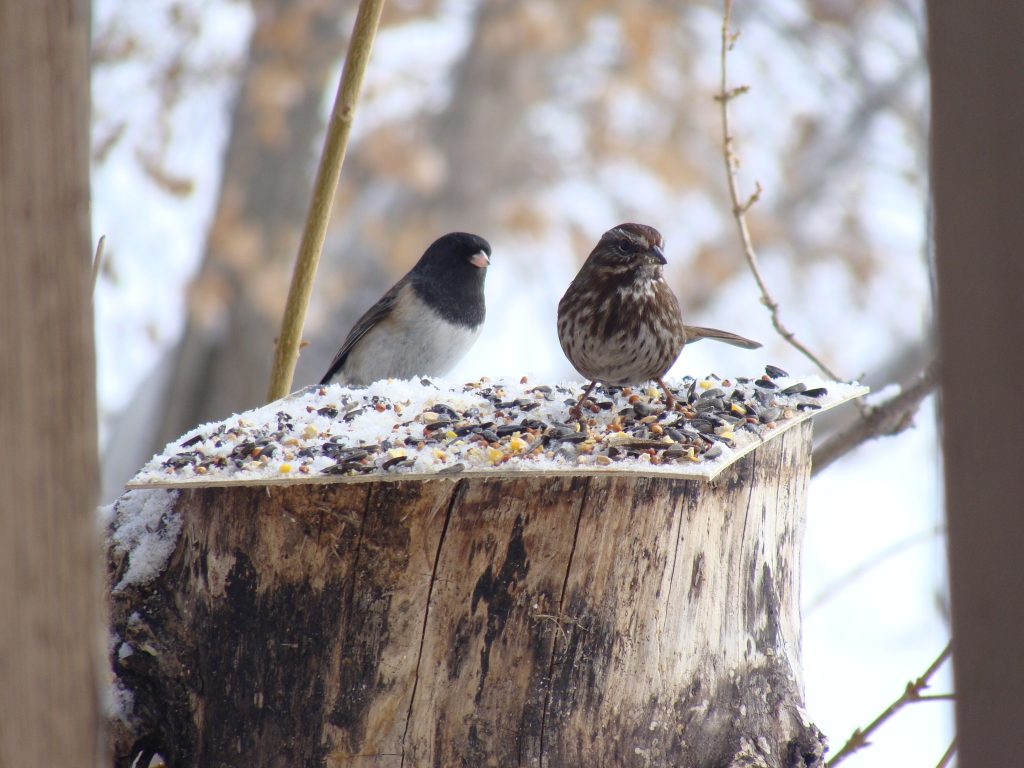
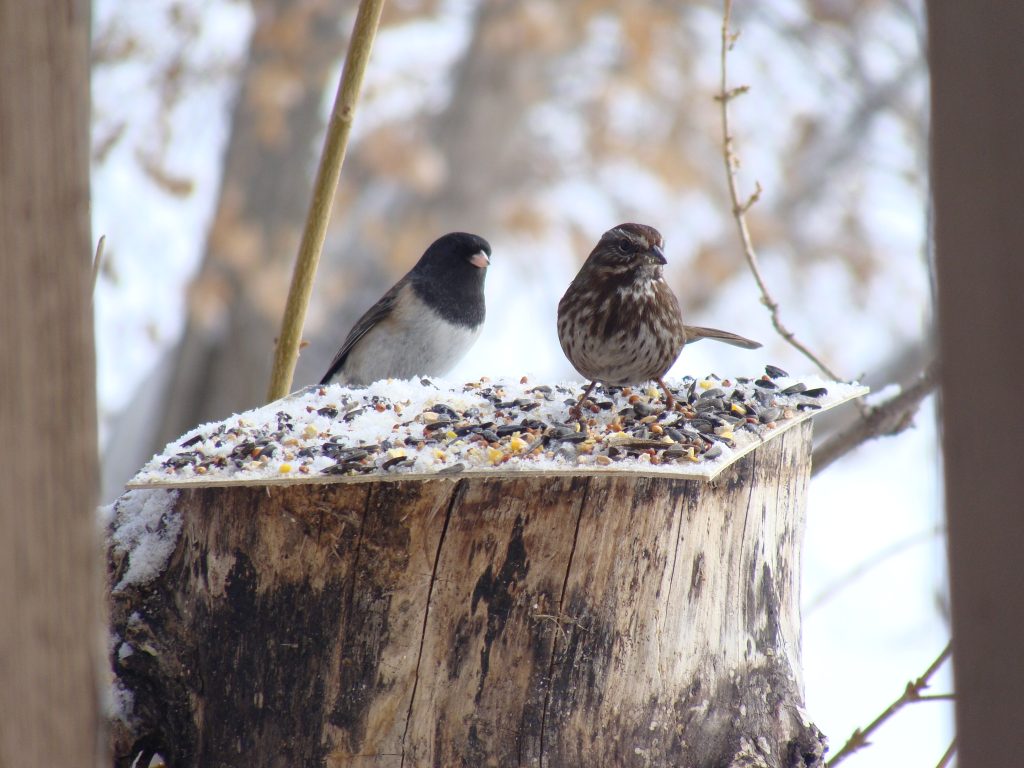
It’s for the Birds, Part II

For the first part of this article, click here.

Question #1: The Chicken or the Egg?

Which came first, the chicken or the egg? In other words, may I eat a bird relying that the egg it lays has a kosher shaped shell?

Question #2: Mom and Pop Shop

Can a non-kosher species of bird and a kosher species of bird produce viable offspring together?

Foreword:

In the first part of this article, we learned that Hashem taught Noach the halachos of how to identify kosher animals, so that he could fulfill: “From each of the kosher animals you shall take seven, male and female, and from the non-kosher animals two, male and female. Also, from the birds of the heavens you shall take seven, male and female” (Bereishis 7:2-3). We also learned that the Torah teaches which varieties of birds are non-kosher (Vayikra 11:13- 19; Devarim 14:11- 19). We also learned that Chazal figured out some simanim of the kosher birds, but that we rely only on mesorah to know which birds are kosher.

Walking on eggshells

At this point, I have a different question. There seems to be a simpler criterion by which we can prove whether a bird is kosher or not. The Gemara mentions that the eggs of kosher species have a definitive appearance. They possess an elliptical shape: the eggs are oval on opposite ends, but one end is considerably wider than the other. Eggs that are either pointed on both ends or wide on both ends are all laid by non-kosher species. Why don’t we use the shape of the egg, often called an “egg shape,” as a siman that the bird mom who laid these eggs is kosher?

The answer is that, in addition to all kosher birds, there are also non-kosher bird species that produce egg-shaped eggs (Shulchan Aruch, Yoreh Deah 86:1). Therefore, the shape of the egg cannot be used as a sign that the egg is kosher, only that it is non-kosher if it is the “wrong” shape.

Mom and pop shop

Regarding mammalian species, the Gemara (Bechoros 7a) rules that a kosher species and a non-kosher species cannot reproduce together. Therefore, even if we cannot determine whether a specific animal chews it cud or has split hooves (for example, we find an animal that chews its cud but its feet are damaged in a way that we cannot determine if it has split hooves) but we know that it reproduced with a kosher species, we can conclude that the unknown species is also kosher. Logically, this same concept should hold true regarding avian species – if a variety of bird for which we have no mesorah crossbreeds with a kosher bird, the new variety has been determined to be kosher.

However, the Chasam Sofer is uncertain whether this rule is true germane to birds. In other words, it is possible that a kosher species of bird and a non-kosher species of bird can produce viable young together. Although the Chasam Sofer is inclined to the view that this should determine that the unknown species is kosher, he is wary to conclude that way halachically. However, the Sochachover concludes that the rule that a kosher and a non-kosher animal will not produce viable young together applies to birds also. In his opinion, if we are certain that two varieties of bird produce a viable offspring together, and we know that one variety is kosher, we can assume that the other, heretofore unknown species is also kosher (Shu’t Avnei Neizer, Yoreh Deah #75).

In this context, there is a very interesting responsum written by the Maharam Shick, one of the most renowned disciples of the Chasam Sofer, in answer to a question posed by the Chasam Sofer’s oldest son and successor as rav and rosh yeshiva in Pressburg (today Bratislava, Slovakia), the Kesav Sofer. The Kesav Sofer asked about birds that have no mesorah as to their kashrus but are now crossbreeding with regular chicken hens and producing both eggs and chicks that are being raised for meat. Can one consume these eggs and the new crossbred birds?

The Maharam Shick divides the question into four shaylos:

1. May one eat a new bird variety of unknown kashrus once it has crossbred with a regular domestic chicken?

2. May one eat a crossbred offspring whose father is of a new variety and whose mother is a domestic chicken?

3. May one eat a crossbred offspring whose father is a domestic rooster and whose mother is of a new variety?

4. May one eat the eggs of this crossbreed? (Shu’t Maharam Shick, Yoreh Deah #100. I rearranged his order of questions to present his answers more clearly.)

The Maharam Shick concludes:

1. Since the Chasam Sofer ruled that crossbreeding a kosher species with a non-kosher variety does not prove that the other parent is kosher, we cannot permit the newly available bird variety. The Maharam Shick adds additional considerations to this aspect of the question, based on the fact that Ashkenazim follow the approach of Rashi that we eat birds only when we have a mesorah that they are kosher.

2. A crossbred offspring whose mother is a domestic chicken is permitted, a ruling that requires an explanation. Here are some of the reasons why the offspring may be permitted even if its father is not:

Ein choshashin le’zera ha’av

A. The early tanna’im, Chananyah and the Sages, dispute whether halacha is concerned about paternal lineage of an animal, called choshashin le’zera ha’av (Chullin 79a), which is the position of Chananyah, or ein choshashin le’zera ha’av, we can ignore the paternal lineage. The halachic conclusion is that it is a safek whether we are concerned. Therefore, when the issue relates to a rabbinic prohibition, we may rule leniently that ein choshashin le’zera ha’av, whereas when it relates to an issue that is min haTorah we rule choshashin le’zera ha’av and are strict. However, even when the prohibition is min haTorah, we can be lenient when there is another safek so that we now have a sefek sefeika, two different possibilities why something is permitted.

In our current shaylah, we know that Mom’s side of the family is kosher, but we are uncertain whether Dad’s family is a kosher breed. Indeed Dad’s breed might be kosher and we also have another halachic reason – ein choshashin le’zera ha’av – that allows us to ignore Dad’s family. This makes the newly developed breed permitted because of sefek sefeika, perhaps the father’s breed is permitted, and even if it is not, we can ignore it because of the rule of ein choshashin le’zera ha’av.

Zeh ve’zeh goreim

B. Food or other benefits produced by two contributing factors, one forbidden and the other permitted, are called zeh ve’zeh gorem. The tanna’im dispute whether zeh ve’zeh gorem is permitted or not. The halachic conclusion is that we are not permitted to create a product that is zeh ve’zeh gorem, but, bedei’evid, the item is permitted. (However, see Shu’t Tuv Taam Vada’as, Yoreh Deah #151.) Thus, even if the newly developed breed’s father was prohibited, it can be permitted because of the mother.

3. Although both explanations I just provided are reasons why one may eat a crossbred offspring whose mother is a domestic chicken, in shaylah #3 of the Maharam Shick, in which father is a domestic rooster and mother is of a new variety, the first reason I provided, ein choshashin le’zera ha’av, does not apply because mother’s side, the more important side, is from the unknown new variety. However, the second reason, zeh ve’zeh gorem, is a basis to rule leniently.

Egg decomposition

Here is another reason why we might be able to permit these cases: The Gemara (Temurah 31a) states that there is a halachic difference between the development of birds’ eggs into chicks and the development of mammals. During the development of an egg into a chick, the living material decomposes and, as a result, is no longer a kashrus issue. According to some authorities, this means that we are not concerned with the species of the parents of a new breed, but simply examine whether the bird that emerges from the shell appears similar enough to a breed that we already know to be kosher. According to this approach, in all cases of crossbreeding bird species, the only consideration might be to what extent the new crossbreed looks like the previously known species.

4. At this point, we should address the fourth of the Maharam Shick’s shaylos: May one eat the eggs that are created from this crossbreed?

If we know that the hen that laid the egg is a domestic chicken, this egg is permitted. If we find an egg and do not know which hen laid it, the halacha is that if the egg appears with a typical egg shape, we may consume the egg (Shu’t Chasam Sofer, Yoreh Deah #74; Shu’t Maharam Shick, Yoreh Deah #100; Shu’t Tuv Taam Vada’as, Yoreh Deah #151).

Conclusion: turkey vs. eagle

Did Benjamin Franklin really want the turkey to be the symbol of the United States of America? Well, this is what he wrote in a letter:

“For my own part I wish the bald eagle had not been chosen the representative of our country. He is a bird of bad moral character. He does not get his living honestly… He is therefore by no means a proper emblem for the brave and honest… The turkey is in comparison a much more respectable bird, and withal a true original native of America… He is… a bird of courage and would not hesitate to attack a grenadier of the British Guards who should presume to invade his farm yard with a red coat.”

To reinforce good old Ben’s argument, we note that whereas the turkey has all four simanim of a kosher bird, the eagle has none. The Ramban explains that the Torah forbade the non-kosher birds because the Torah wants us to avoid the bad midos that they exhibit. One could assume that the kosher species may exhibit admirable traits that the Torah wants us to emulate. Certainly, the courage to observe mitzvos in times of adversity is a tremendous virtue worth thinking about the next time we eat turkey.

It’s for the Birds, Part I

Question #1: Bird Determination

I know that birds are very determined to get to their destinations, but how do we determine whether they are kosher?

Question #2: Noach’s Kosher Aviary

How did Noach know which species of bird and animal are kosher? The Torah was not given until Moshe Rabbeinu, fifteen generations later!

Question #3: The Chicken or the Egg?

Which comes first, the chicken or the egg? In other words, may I eat a bird relying that the egg it lays has a kosher shell shape?

Question #4: Mom and Pop Shop

Can a non-kosher species of bird and a kosher species of bird produce viable offspring together?

Foreword:

Noach was commanded to bring more kosher than non-kosher animals into the teivah, as the Torah states: “From each of the kosher animals you shall take seven, male and female, and from the non-kosher animals two, male and female. Also, from the birds of the heavens you shall take seven, male and female” (Bereishis 7:2-3). But how did Noach know which species are kosher? Rashi (Bereishis 7:2) explains that this demonstrates that Noach studied the Torah. Presumably, he became an expert on the list of kosher birds in Parshas Shemini and Parshas Re’eih.

However, this presents us with a curious problem. Noach could have easily observed which mammals have split hooves, and he could also figure out which species chew their cud. (Although it is not perfectly accurate, I am going to substitute the word mammal, rather than animal, for the Torah’s beheimah and chayah in order to avoid confusion that occurs in English – since birds, fish, reptiles and insects are all types of animal, although none of them qualify as either beheimah or chayah, which are subcategories of what we call “mammals.”)

Although the Torah describes the exact indicating signs, simanim, that render fish and animals kosher (“indicia” in proper English), regarding birds the Torah simply inventories the non-kosher varieties (Vayikra 11:13-19; Devarim 14:11-19). Most of these appear to be non-kosher species, but in four instances, the Torah states lemino or lemineihu, meaning that these include categories of non-kosher birds. In addition, Chazal’s analysis of the case of nesher concludes that this is also a category of birds. So how did Noach know to identify the non-kosher species? The rishonim (Radak, Bereishis 7:2; Ramban, Bereishis 6:20) explain that when Noach was commanded concerning how many of each species to bring into the teivah, he was also told how to identify which are kosher.

Noach’s Kosher Aviary

We now have the answer to one of our opening questions: “How did Noach know which species of bird and animal are kosher? The Torah was not given until Moshe Rabbeinu, fifteen generations later!”

According to the Ramban and others, Hashem taught Noach the Torah, including a comprehensive listing of all kosher birds and animals, so that he could accomplish what he was commanded.

Simanim of kosher birds

At this point, we need to understand several aspects of the indicia of kosher birds. As opposed to kosher mammals, fish and grasshoppers, where the Torah provides rules indicating which are kosher, regarding birds the Torah lists the non-kosher ones, implying that all other birds are kosher. The Gemara analyzes the Torah’s two lists, concluding that 24 varieties and categories of bird are non-kosher (Chullin 61b). Someone who verifies all 24 non-kosher varieties may shecht and eat any other bird species he discovers. The Gemara states that a hunter who recognizes all the varieties of non-kosher bird may shecht and eat any other species of bird he discovers and may teach other people which species are kosher (Chullin 63b). By process of elimination, our hunter knows that all other birds are kosher. The same passage of Gemara notes that there are countless kosher species of birds (Chullin 63b).

Size of teivah

Of course, we now have a question: If there are thousands of varieties of kosher bird, each of which had fourteen representatives in the teivah, how could the teivah have been big enough for all of them!

I note that, even without this birdie calculation, the Ramban already points out that the teivah was not possibly big enough to accommodate all its passengers and their food requirements. He observes that even ten teivos of the size that Noach constructed would be vastly insufficient to hold the necessary cargo. It could only exist and survive by a miracle. The Ramban then explains why Noach was required to build the teivah to its insufficient dimensions.

Bird determination

At this point, let us address our opening question: “I know that birds are very determined to get to their destinations, but how do we determine whether they are kosher?”

Chazal observed that there are four simanim of kosher birds (Mishnah Chullin 59a). However, there is a qualitative difference between the identifying characteristics of birds and those that the Torah uses to identify kosher fish and mammals. Any mammal that has fully split hooves and chews its cud is kosher, and any that does not have both of these indicia is not. There are no exceptions; the simanim of the Torah are absolute. Similarly, any fish that has fins and the proper scales (see Ramban, Vayikra 11:9; Rema, Yoreh Deah 83:1) is kosher, and any that does not have these simanim is not kosher. Again, there are no exceptions.

However, when discussing indicia that a bird is kosher, the Mishnah teaches that there are four simanim. Any bird that has all four kosher simanim is kosher. Any bird that has none of the four kosher simanim is not kosher. However, many birds have some of the simanim, but not others, and are still kosher. Yet there are other birds that have some simanim and are not kosher. In other words, a bird that has some of the simanim, but not all, might be kosher and might not be. This means that the simanim can be used sometimes to ascertain whether a bird is kosher, but are not a litmus test. Although the halachically expert hunter mentioned in the Gemara could figure out by process of elimination whether a species is kosher, the only practical way for us to know whether a bird with some simanim and not others is kosher is through mesorah.

For example, the peres and the ozniah, two of the 24 non-kosher varieties, each possesses only one of the kosher simanim and lacks the other three. The oreiv, usually identified as the raven (see Tosafos, Chullin 62a s.v. Mipnei who discusses whether this is accurate) and the zarzur each has two kosher simanim and lack the remaining two, and the remaining 19 types of non-kosher birds each has three of the simanim and lacks only one. (This follows the approach of most interpretations of this passage of Gemara.) But there are other birds that have one, two or three of the simanim and are kosher.

What are the indicia that a bird is kosher? In other words, what are the simanim that if we can identify that a bird has all of them it is definitely kosher? For practical reasons, I am not listing and explaining them in the order of the Mishnah, but according to function. The Mishnah (Chullin 59a) lists four simanim, which include three anatomical features, one external and two internal, and one behavioral.

The external feature, called etzba yeseirah, means that it possesses an “extra claw,” or, according to other opinions, “a larger claw.” The rishonim disagree what exactly this means, some understanding that this claw points in the opposite direction from the other claws of the bird; others explain that this claw protrudes at a higher point on the leg than do the other claws. A third approach understands that the claw protrudes outward farther than the others.

Crop and gizzard

The two internal features of a kosher bird are that it has a crop, and a gizzard that can be peeled manually. To the uninitiated, this sounds fairly strange, particularly, since most of us have never dissected the digestive system of a bird and certainly have never had the opportunity to compare the digestive systems of various types of bird. Let me explain, very briefly:

The crop is an expandable storage pouch for undigested food. It is commonly found among birds that eat seeds and grains for sustenance.

The gizzard is more commonly known to us by its Yiddish name, pupek, whose hard muscle grinds the seeds that a bird eats so that they can then be properly digested.

Don’t chew your food before you swallow it!

Hashem gave these features to small birds who stick to a vegan diet. These allow them to enter fields and meadows and quickly gobble up a large quantity of seed without chewing or digesting them. Then they can disappear to their hiding places before they become somebody’s lunch. Those of us who do not have crops and gizzards would get severe indigestion if we gobbled up our food this way, which is why your mother told you to chew your food slowly and carefully before you swallow it.

Doreis

The behavioral feature is that kosher birds are never doreis. The rishonim debate exactly what this is, but it is a feature that exhibits cruelty in the way the bird seizes and devours prey. The Gemara (Chullin 62b) implies that a bird is non-kosher even if it is doreis very rarely, making it difficult to identify a bird as a non-doreis. It is also important to note that although all birds that are doreis are non-kosher, the inverse is not true — there are varieties of fowl that are not doreis, yet are not kosher.

This leads us to a conundrum raised by Tosafos (Chullin 61a, s.v. Kol Of). Whereas the simanim for kosher mammals and fish are taught by the Torah, the simanim for kosher birds are observations of the Mishnah. But that assumes that Chazal checked carefully every kosher species of bird in the world and determined that not one of them is doreis. How did that happen?

Tosafos rules out the explanation that this was an oral tradition communicated to Moshe Rabbeinu at Har Sinai (halacha leMoshe miSinai) because, if that were true, the Torah need not have mentioned all 24 varieties of non-kosher bird in order to identify all non-kosher varieties. Instead, it could have succinctly taught that all birds that are doreis are non-kosher and then provide the very small list of birds that, despite the fact that they are not doreis, are still not kosher.

Tosafos focuses on who was the only person in world history to have seen and interacted with every species, and that is Noach, who spent months in very close quarters providing the needs of all the terrestrial species of the world. Noach, who knew which birds are kosher and which are not (as explained above), observed that none of the kosher varieties were doreis. Thus, the siman that a doreis is not kosher is an oral tradition dating back to Noach (Chullin 61a, s.v. Kol Of).

The Mishnah records an alternative method of verifying whether a bird is doreis: Rabbi Elazar ben Rabbi Tzadok rules that any bird that splits its talons, two before and two behind, when it grips a rope, is doreis and therefore not kosher (Chullin 59a, as explained there by the Gemara 65a). The halachic authorities quote this statement as definitive.

For the continuation of this article, click here.

Eat Kosher! Part 2

 Question #1: How many mitzvos?

“Is keeping kosher more than one mitzvah?”

Question #2: Food for thought

“Am I required to eat each of the kosher species?”

Question #3: Check your scales

“Must I check fish for scales each time I purchase one?”

Introduction:

Two weeks ago, in part I of this article, we discovered that when the Torah discusses which species are kosher, it says (in parshas Shemini), “These are the living things from which you may eat,” which the midrashei halacha and the Rambam count as mitzvos aseih. We noted that the Rambam considers these as lav haba miklal aseih, a prohibition verbalized as a mitzvas aseih, which is sometimes called an issur aseih. We also noted that the Rambam counts four different mitzvos aseih, one to eat only kosher animals, one to eat only kosher fish, one to eat only kosher fowl, and one to eat only kosher grasshoppers. We also learned that the Rambam explains that he wrote the Sefer Hamitzvos to explain the rules that govern what is included in the listing of the 613 mitzvos. We now continue with part two of our article.

What type of positive mitzvah?

The first half of Sefer Hamitzvos consists of fourteen rules, called sherashim, that the Rambam established to determine whether something is counted as one of the 613 mitzvos or not. In the sixth shoresh, the Rambam rules that if a mitzvah is commanded in the Torah both as a positive commandment and as a negative prohibition, then it is counted as two of the 613 mitzvos — both as a positive mitzvah and a negative one. The Rambam explains that there are three types of mitzvos aseih in which this occurs.

  1. In some instances, there is a positive mitzvah that is a flipside of the negative prohibition. For example, someone who observes Shabbos or Yom Tov fulfills a positive mitzvah (Pesachim 84a). There is also a negative prohibition which one violates by performing prohibited activity on Shabbos or Yom Tov.

Similarly, there is a positive mitzvah to observe shemittah, and negative ones involving performing prohibited activity during shemittah. Another example is fasting on Yom Kippur, which involves both a positive mitzvah of afflicting oneself and a lo sa’aseh.

  1. A second type of positive mitzvah that accompanies a lo sa’aseh is what is called a lav shekadmo aseih — there is a mitzvah to do something, but one who violates the intent of the positive mitzvah will, at that time, also violate a lo sa’aseh. Two examples of this rule are the cases of the oneis and the motzi shem ra, both of whom are required by a mitzvas aseih to marry and remain married to the wronged woman (should she agree). Should he subsequently divorce her, he will violate a lo sa’aseh.
  2. A third type of positive mitzvah that accompanies a lo sa’aseh is called lav hanitak le’aseih, in which the mitzvas aseih is the instruction that the Torah provided if someone violates the lo sa’aseh. Here are two examples of this situation: The mitzvas lo sa’aseh of nosar is to make sure not to leave over edible parts of a korban past the time that the Torah established for that particular korban. One who does leave over and violates the lo sa’aseh now becomes commanded to observe a mitzvah aseih of burning the leftovers.

A second example is the mitzvah of shiluach hakein, in which one is prohibited from taking the mother bird while she is fulfilling her motherly duties to her eggs or young. One who violates this prohibition by seizing the mother bird is now required to observe the positive mitzvah of setting her free.

We are now faced with a question: If the word tocheilu is a positive mitzvah, what is the Torah commanding us to do? It certainly does not fit the second or third of the three categories mentioned above. The second category would mean that there is a positive mitzvah that one is required to perform whose result one now wishes to abrogate. The mitzvah of tocheilu certainly does not fit this category. Similarly, tocheilu cannot fit the third category, because this mitzvah is not correcting an error.

If tocheilu is included in the first category, it would mean that one who eats non-kosher violates an aseih, also. Whether we can look at the mitzvah this way appears to be the point of departure between the Rambam and the Ramban. The Ramban wrote the earliest commentary to the Rambam’s Sefer Hamitzvos, with a goal of explaining the Behag’s approach and answering the questions that the Rambam asks on the Behag. At times, the Ramban takes issue with some of the Rambam’s 14 rules. However, the Ramban accepts the Rambam’s sixth rule that a mitzvah, such as Shabbos or Yom Tov, when expressed by the Torah both in a positive way and a negative one, is counted twice, both as a mitzvas aseih and as a mitzvas lo sa’aseh. The Ramban disagrees with the Rambam regarding these four mitzvos of identifying kosher species.

To quote the Ramban, “I see in this matter a major dispute (between the Behag and the Rambam) and, without any question, one of the opinions is erroneous. There are instances in which there is both a lo sa’aseh and an aseih in the same topic; however, both are not counted as mitzvos. An example is the permitted and forbidden animals, fish and fowl, where the Torah includes a positive statement, ‘this is the animal that you may eat,’ and Chazal interpret this to be a mitzvas aseih. Similarly, when it says, ‘you may eat any pure bird’ and it is counted as a positive mitzvah. And again, when it says, ‘this you may eat, from whatever is in the water.’ It is obvious that the intent of the Torah is not to say that when one eats an animal or a fish with the proper kosher signs that one fulfills a mitzvah, and that someone who traps them and then does not eat them is in violation of his observance of a positive mitzvah. The intent, clearly, is that one may eat only these species and not the non-kosher ones. This is called a lo sa’aseh that is derived from a positive statement (in Hebrew, this is called a lav haba miklal aseih), whose purpose is to establish that someone who violates the lo sa’aseh also violates an aseih.”

The Ramban then notes that in all of these instances, the Rambam counts as positive mitzvos that one check whether a species of animal, bird, fish or grasshopper is kosher. However, concludes the Ramban, “The Behag did not count them, because they do not include a positive activity, whereas avoiding eating the prohibited is already included in the lo sa’aseh. Consequently, referring to the prohibition in a positive way does not add to the mitzvah count in these instances, just as repeating the lo sa’aseh several times does not add an extra lo sa’aseh to the mitzvah count.”

The last point raised by the Ramban is mentioned by the Rambam and others. The Torah often repeats a prohibition many times. When the additional pasuk does not add any new halachic information, the additional reference does not constitute an additional mitzvah.

Be positive!

Many authorities rally to address the final point of the Ramban, that the Rambam’s inclusion of these four positive mitzvos must include some additional component or ruling to the halacha. Additional support for this approach can be brought from the way the Rambam, himself, mentions these mitzvos. In all four instances, the Rambam writes that we are commanded to check for the signs that the particular species is kosher. And he writes this in two places, once in the Mishneh Torah and another time in the Sefer Hamitzvos. There is also one time in the Mishneh Torah where the Rambam writes that the mitzvah is to “know” the kosher signs. What exactly does this mitzvah of checking or knowing entail?

What does a mitzvah add?

Many approaches are suggested to explain what the positive mitzvah might be including, according to the Rambam. Some understand that the mitzvah requires that one be completely familiar with the simanim of the kosher species and have hands-on experience. Book knowledge that split hooves and chewing cud are kosher signs, without knowing what these two terms mean, does not fulfill the mitzvah (Darchei Teshuvah 79:1, quoting Korban Aharon and Yad David). It is somewhat implied by them that the mitzvah of studying Torah is fulfilled by knowing the laws, without necessarily knowing what one is to look for; but, without hands-on experience, there is no fulfillment of the mitzvas aseih.

A second approach is that someone who consumes food from a certain species, not knowing if it is kosher or not, who then discovers that he indeed ate a kosher animal, violates the mitzvas aseih for not checking the indicative factors first (Sefer Hachinuch; Pri To’ar, Yoreh Deah 79:1; Kinas Sofrim; see also Darchei Teshuvah 79:1). To quote the Sefer Hachinuch (Mitzvah #153) “One who violates this mitzvah because he checked only one siman and relied on that without checking for the other siman, even though it turns out that he ate from the kosher species, has neglected his observance of this mitzvah of checking simanim.”

What’s in a horn?

When the Sefer Hachinuch mentions this approach to explain the Rambam’s position, he adds a further comment that appears somewhat strange. He writes that there is also a requirement to know the simanim that identify whether a particular species is a beheimah or whether it is a chayah. There are several laws that are affected by this distinction, and the Gemara provides criteria, depending on the appearance of the animal’s horns, whereby one can identify whether a particular kosher species is a beheimah or a chayah.

However, this comment of the Sefer Hachinuch is very surprising. The Torah, as explained by the above-quoted comments of the Sifrei and the Sifra, includes a mitzvah that we identify whether a species is kosher or not. No matter how we understand this mitzvah of the Torah, and I will soon provide several other approaches, the mitzvah applies only to places where the Torah states that we may eat a certain variety of creature and then provides a defining characteristic or nomenclature. However, where do we see any mitzvah requiring one to identify whether a specific kosher species is a beheimah or a chayah?

The Minchas Chinuch answers that this is true, because horns function as a secondary siman to determine whether a beheimah is kosher, although they do not function as a siman to determine whether a chayah is kosher. In other words, there are no non-kosher beheimos that bear horns, although there are non-kosher chayos that do. Thus, having kosher beheimah horns can be used to determine whether a species is kosher.

This explanation of the Minchas Chinuch also includes a very novel interpretation. The Torah provides two criteria to determine whether a mammal is of a kosher species: does it ruminate, and does it have completely split hooves. Granted that horns are a secondary characteristic, where do we see that this is included in the Torah’s mitzvah?

More positive attitudes

There are also numerous technical answers why the Rambam counted these as separate mitzvos. Some authorities explain that one who checks the simanim on an unfamiliar species that he would like to eat to see if it is kosher fulfills a mitzvas aseih. This author is inclined to think that, according to this opinion, he should recite a brocha before checking, because that is what the Torah commanded one to do. We do not recite a brocha because of the machlokes haposkim as to whether this act indeed fulfills a mitzvas aseih.

We should note that the halachic authorities accept that once one recognizes a particular species as kosher, there is no further requirement to continue checking the kosher signs of this species (Minchas Chinuch 153; Darchei Teshuvah 79:1). Thus, there is no mitzvah to check for the scales of an obviously identifiable salmon.

Other positive approaches

Still others explain that the requirement of the Rambam’s mitzvas aseih is that one may not rely on the fact that a specific species is probably kosher. In general, there is a halacha that one may rely on rov. Upon this basis, someone not knowing whether a certain variety of bird or fish is kosher could rely on the fact that most fishes with a certain appearance are kosher, or that most birds are kosher. Although, in general, the halachic rule is that one may assume that what is before you is from the majority that are kosher, one may not consume an unfamiliar species, based on the information that there is a rov that this species is kosher (Shu”t HaRivosh #192).

There are other answers, which are basically technical, to explain the Rambam’s position. Some explain that one violates the mitzvas aseih by eating less than a kezayis, even though this is too small an amount to be culpable for violating the lo sa’aseh (Pri Megadim, quoted by Minchas Chinuch, Mitzvah #470 and by Maharam Shik, Mitzvah #154). The Minchas Chinuch (ad loc.), himself, suggests an alternative approach. One who consumes a non-kosher specias in an unusual manner will not violate the lo sa’aseh. The Minchas Chinuch suggests that he will violate the mitzvas aseih min haTorah, if one eats something that is not edible. This would be a very novel and stringent idea in halacha, which has ramifications regarding the consumption of medicines and vitamins, a topic we have discussed in the past.

Conclusion

At this point, we see that there are halachic ramifications to the dispute between the Rambam and the Ramban as to whether there is a positive mitzvah to keep kosher, or at least, to eat only from kosher species. We should always hope and pray that the food we eat fulfills all the halachos that the Torah commands us.

Eat Kosher!

In chutz la’aretz, this week parshas Shemini is read, which includes much of the Torah’s discussion regarding which species are kosher. Although in Eretz Yisroel this reading was last week, none of the material in this article is outdated.

Eat Kosher!

Question #1: What’s gnu?

Zoe Oligist asked me: “If the wildebeest chews its cud and has split hooves, which of the ten kosher animals is it?”

Question #2: Food for thought

“Am I required to eat each of the kosher species?”

Question #3:

“Is a tzvi a deer or an antelope? For that matter, what is the difference between a deer and an antelope?”

Question #4:

“Must I check a fish for scales each time I purchase one?”

Introduction:

The Torah discusses which species are kosher and which are not in two places, in parshas Shemini and in parshas Re’eih. In parshas Shemini, the Torah introduces the topic as follows: “Hashem spoke to Moshe and to Aharon, saying to them, ‘Speak to the children of Israel, saying, these are the living things from which you may eat. From the animals that are upon the ground: whichever has a split hoof that is separated completely and ruminates among the animals, those you may eat'” (Vayikra 11:1-3). The Torah then explains that species that possess only one of the two kosher signs are not to be eaten, such as the camel, which chews its cud and has a partially split hoof, but is not kosher, since its hoof is not fully separated (Vayikra 11:4). The Torah then provides the rules governing which sea creatures may be eaten. Following this, it lists which birds we may not eat, and then provides the rules regarding which grasshoppers are kosher and which are not.

Parshas Re’eih includes a review of most of the basic laws of kashrus, including a reiteration of which species of animal, fish and bird are kosher for the Jewish palate. The instructions regarding kosher grasshoppers do not appear in parshas Re’eih, but only in parshas Shemini. In parshas Re’eih, the Torah begins its discussion by listing the ten types of beheimah that are kosher, without mention of their kosher signs until later. To quote the Chumash (Devorim 14:4-5): Zos habeheimah asher tocheilu: shor, seh kesavim, veseh izim, ayil, utzvi, veyachmur, ve’ako, vedishon, use’o, vazamer, “these are the animals that you may eat.” The ten that are listed are the only species of mammal that ruminate and have totally split hooves, indicating that they are kosher.

What are these species? We can readily identify some of them: shor is cattle, kesavim are sheep, and izim are goats. However, from that point, the going gets more confusing, since it is unclear whether ayil is an antelope and tzvi is a deer, or vice versa (see Tosafos, Chullin 59b s.v. Veharei Tzvi). (The difference between antelope and deer is that antelope have permanent horns, whereas deer have antlers, which shed and regrow every year.)

What’s gnu?

At this point, let us address one of our original questions. “Zoe Oligist asked me: ‘If the wildebeest chews its cud and has split hooves, which of the ten kosher animals is it?’”

Although I have invented the name of the questioner, this exact query is, indeed, genuine, and was asked of Rav Yehoseif  Schwartz, a unique gadol and poseik of the early nineteenth century (Responsa Rosh Hashoni #18). Most modern Torah authorities would refrain from providing positive identification of the species mentioned in the Torah, other than the five mentioned above. (See, for example, the translation of Rav Hirsch to our verse.) However, Rav Schwartz concluded that yachmur is the wildebeest, also called a gnu, a variety of large antelope native to central and southern Africa. (Whether you refer to this antelope as wildebeest or gnu depends on whether you prefer to use a name whose linguistic origin is Afrikaans, a language that began as a dialect of seventeenth-century Dutch, or Bantu, a family of languages of the native peoples of south and central Africa. From what I understand, the gnu does not mind being called a wildebeest.) Rav Schwartz based his determination on the following: He writes that he had positively identified the other nine species mentioned by the Torah, and he also knew that the wildebeest, being a ruminant with split hooves, is kosher and not one of those nine. Since he did not know what a yachmur is, and he knew that the wildebeest is kosher, simple deductive logic proved that the wildebeest and the yachmur must be the same creature. (By the way, he cites there, authoritatively, Rav Saadiyah Gaon’s identifying the zamer as the giraffe. Although I have read articles claiming otherwise, giraffes chew their cud and have fully split hooves; thus, they are kosher.)

Personally, I have difficulty with Rabbi Schwartz’s method of identifying the yachmur. According to my primitive research, there are 91 species of antelope known to man, all of which are ruminants and have split hooves. There are also many species of deer, all of which are split-hooved ruminants, and a wide variety of species of sheep and goats. In addition, the entire bovine family, including Western domesticated cattle, Indian zebu cattle, musk oxen, Asian water buffalo, African cape buffalo, European bison (also called the wisent), American bison (colloquially, but somewhat inaccurately, referred to as buffalo), and Himalayan yaks are all ruminants and have split hooves. Clearly, since we have enumerated here many, many times the ten species listed by the Torah as kosher, the Torah must be providing us with categories of kosher animals, not specific species. Or, in more accurate words, the Torah’s categorization of species probably varies considerably from that of the zoologist. Therefore, those venturing on an African safari may consider the gnu to be kosher, without necessarily knowing under which of the seven chayos it is classed.

Food for thought

Let us return to the second of our opening questions: “Am I required to eat each of the kosher species?”

To analyze this question, we need two introductions. The first is to try to understand how to translate the Torah’s word tocheilu. This word can be translated into English as You should eat or as You are to eat or as You may eat. If we translate it You should eat or You are to eat, does this mean that there is a requirement to eat each of the kosher species? The midrash halacha on this pasuk, the Sifra, provides one way of understanding these words. There it states, “This teaches that Moshe held each living creature and showed it to the Bnei Yisroel, instructing them: ‘This tocheilu, and this you may not eat’ (Vayikra 11:2, #62 in the Malbim’s numbering).” I deliberately did not translate the word tocheilu here, so as not to bias our understanding of a later passage of Sifra, which I will mention shortly.

The Ramban, in his commentary to the Sefer Hamitzvos of the Rambam, writes that it cannot mean that the Torah requires that we eat these species. And he is not alone. All halachic authorities dating back more than a thousand years assume that the Torah is not commanding that we eat kosher species. The Ramban notes that it is a machlokes between the Behag, who does not count these four mitzvos, and the Rambam, who does. The Ramban explains that the Rambam understood that one who violates the lo sa’aseh by eating a non-kosher species also violates the aseih. On the other hand, the Behag does not count them because there is no positive mitzvah. The Ramban explains that just as a repeated mitzvah does not get counted twice, repeating it as an aseih does not add to the mitzvah count.

Is it a mitzvah?

There is a dispute among the rishonim whether the mitzvah of tocheilu is counted among the 613 mitzvos. The Rambam, both in his Sefer Hamitzvos (positive mitzvos 149), his work on the listing of the 613 mitzvos, and in the Mishneh Torah, counts tocheilu as one of the mitzvos (Hilchos Ma’achalos Asuros, introduction and 1:1). He counts not only this mitzvah, but also three other mitzvos aseih, one to identify kosher fish, another to identify kosher grasshoppers and a third to identify kosher birds (Rambam positive mitzvos 150-152). According to the Sefer Hachinuch, three of these mitzvos are first mentioned in parshas Shemini and therefore counted there, and the last, identifying kosher birds, is mentioned only in parshas Re’eih.

Actually, the Rambam has strong sources in Chazal for his position, since both the Sifra  (Vayikra 11:4, #69 in the Malbim’s numbering) and the Sifrei (Devorim 14:4, #96 in the Malbim’s numbering) state the following: “‘Osah tocheilu, this you may eat, but you may not eat non-kosher animals.’ This teaches me that this is prohibited because of a mitzvas aseih; how do I know that there is a lo sa’aseh? The Torah teaches, ‘The camel, the rabbit, the hyrax, and the pig – from their flesh you shall not eat.’ This includes only these four species; how do I know that I may not eat other non-kosher species? I derive it logically: If there is a lo sa’aseh prohibiting the consumption of the varieties that possess one indication that they are kosher, certainly those that do not possess either indication… are definitely not kosher.” In conclusion, all non-kosher varieties are prohibited directly from the Torah with a mitzvas aseih, and a lo sa’aseh, by virtue of a kal vachomer.

Notwithstanding the above quotation from the Sifra, most other early authorities who count the 613 mitzvos, including the Baal Halachos Gedolos, Rav Saadiya Gaon, and the Ramban, omit these four mitzvos, apparently because they feel that their inclusion as a positive mitzvah does not add any halachic factors.

In order to understand this dispute better, we need to explain some background to the counting of the 613 mitzvos.

The Sefer Hamitzvos includes the Rambam’s listing and explanation of the 613 mitzvos, but also includes an extensive explanation regarding the rules that govern what is included in their listing. The Rambam explains in his introduction to the Sefer Hamitzvos, that he was planning to write a halachic work that would include all the laws of the entire Torah, but realized that before he began writing this sefer halacha, he first needed to explain extensively what is included in the 613 mitzvos and why. (Indeed, the Rambam did write this work, which is the Mishneh Torah.)

Baal Halachos Gedolos

The Rambam mentions that the accepted counting of the 613 mitzvos, prior to his own Sefer Hamitzvos, was that of the Baal Halachos Gedolos, a halachic work authored by Rav Shimon Kaira in the era of the Geonim. (Although the Behag is often cited as the work of an earlier gaon, Rav Yehudai Gaon, since the Halachos Gedolos quotes Rav Yehudai Gaon many times, he obviously cannot be the author.) Subsequent to the Behag’s list, many other authors followed this list, while others amended it in minor ways. In addition, it spawned many liturgical poems. However, it appears that until the Rambam penned his Sefer Hamitzvos, no one disputed the basic approach that the Behag used to determine what counts as a mitzvah.

Why the Sefer Hamitzvos?

The Rambam writes that he realized that if he listed the mitzvos before each section of his Mishneh Torah according to his own list, he would be disputing an accepted approach to Judaism. Thus, he was in a quandary. On the one hand, his Mishneh Torah would be incomplete without listing the mitzvos involved in each of its sections; on the other hand, people might reject his list of mitzvos, unless he explained its rules and why he disputed what had been, heretofore, accepted. For this reason, the Rambam explains, he wrote the entire Sefer Hamitzvos as an introduction to his Mishneh Torah, in order to explain the rules that determine what counts as a mitzvah and what does not.

What difference does it make whether something is a mitzvah or not?

Although many authors discuss what to include in the count of the 613 mitzvos, it is interesting to note that few of them discuss why it is important to know what are the 613 mitzvos.

On the other hand, the Rambam contends that it is essential to a proper perception of Torah to understand the relationship between the halachos of the Torah and the 613 mitzvos. As part of this understanding, the Rambam describes that he decided to structure the Mishneh Torah according to related mitzvah topics, rather than follow the order of the Mishnah. The Rambam then mentions that he decided to precede each section of the Mishneh Torah with an introduction, in which he would list the mitzvos included in that section.

But does it count?

How does this debate affect kashrus? What we have quoted, until now, appears to be a rather theoretical discussion. How does this affect what I eat? To explain this, we need to examine one of the points that the Rambam makes in his Sefer Hamitzvos.

For part II of this article, click here.


image_print